
If you’ve ever walked into your home and noticed a stuffy, stale feeling, you’re not alone. We talk to homeowners every day who struggle with dust, allergens, and odors floating through their living spaces. The truth is, the air inside your home can be way worse than outdoor air. That’s where a whole house air purifier comes in. These systems connect directly to your HVAC and clean every room at once. Let’s break down everything you need to know.
What Is a Whole House Air Purifier and How Does It Work?
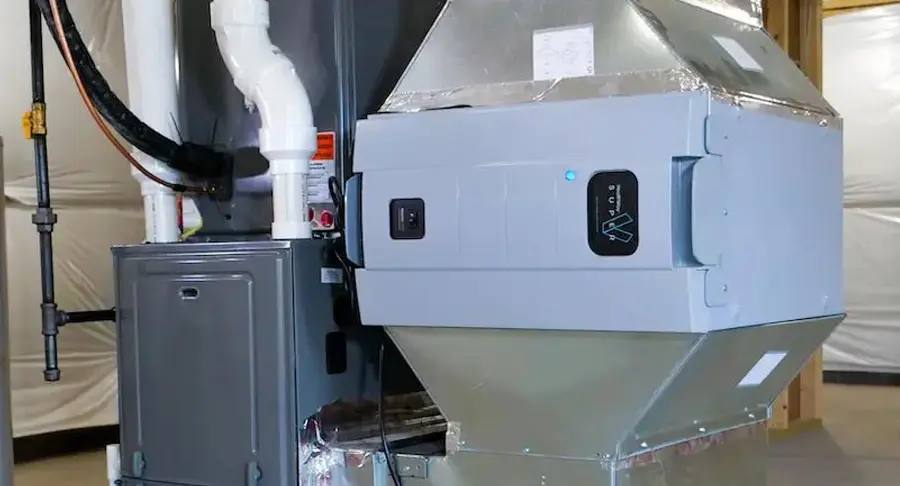
A whole house air purifier is a system that connects to your existing heating and cooling setup. Instead of cleaning air in just one room, it treats air throughout your entire home. We install these units right into the air duct system. As air circulates through your HVAC, it passes through the purifier before reaching your rooms.
The process is pretty straightforward. Your furnace or AC pulls air through return ducts. That air then moves through the purification unit, where filters trap particles. Clean air gets pushed back out through supply vents. This continuous cycle means every breath you take at home is filtered. We’ve seen these systems make a huge difference for families dealing with allergies or asthma.
Why Indoor Air Quality Matters More Than You Think
Here’s something that surprises most people. Indoor air quality can be two to five times worse than outside air. Your home traps pollutants like dust mites, pet dander, mold spores, and chemicals from cleaning products. Without proper air filtration, these particles just keep circulating.
Poor air quality affects your health in real ways. You might notice more headaches, fatigue, or respiratory issues. Kids and elderly family members feel the effects even more. We’ve worked with countless homeowners who didn’t realize their symptoms were connected to their home’s air. Once they improved their indoor air quality with a whole house air purifier, they felt the difference within days.
Whole House Air Purifier vs Portable Air Purifier
This is a question we get all the time. Should you buy several portable air purifier units or invest in one central system? Both options clean the air, but they work very differently. Portable units handle single rooms and need to be moved around. A central air purifier treats your whole home automatically
Think about it this way. You’d need multiple portable units running constantly to match what one whole house air purifier does. That means more electricity, more filter changes, and more noise. Portable options work great for apartments or specific problem areas. But for comprehensive coverage, a whole home air purifier makes more sense long-term.
Benefits of a HEPA Air Filtration System
HEPA filters are the gold standard in air purification. These filters capture 99.97% of particles as small as 0.3 microns. That includes pollen, bacteria, and even some viruses. When we recommend a hepa air filtration system, we’re talking about serious particle removal.
Here’s what a quality HEPA system catches:
- Dust and dust mites
- Pet dander and hair
- Pollen and plant particles
- Some bacteria and viruses
A hepa filter needs replacement about once a year, depending on usage. The investment pays off when you consider how much cleaner your air becomes. Many of our clients with severe allergies say HEPA filtration changed their lives at home.

Types of Air Purification Systems for Your Home
Not all air purification systems work the same way. Understanding your options helps you pick what fits your needs. Mechanical filters physically trap particles as air passes through. Electronic purifiers use charges to capture contaminants. Some systems combine multiple technologies for better results.
We often recommend whole home air systems that use multiple stages. The first stage catches large particles like dust. The second stage handles smaller allergens. Some units add a third stage for gases and odors. The type of air purifier you choose depends on your specific concerns. Homes with smokers need different solutions than homes with just pet allergies.
UV Light and Air Filter Technology Explained
UV light technology adds another layer of protection. These lights kill bacteria, viruses, and mold that pass through your system. We install UV light units inside the air handler, where they treat the air constantly. This technology works alongside your regular air filter for maximum protection.
Here’s how the combo works. Your air filter traps particles physically. The UV air treatment then neutralizes biological contaminants that might slip through. Together, they create a powerful defense system. Many hospitals use similar technology to keep the air sterile. Now homeowners can access the same protection.
How to Install a Whole-House Air Purifier with Your HVAC
Getting a whole house air purifier installed isn’t a DIY project. The system needs proper integration with your existing HVAC air setup. A technician will assess your ductwork and recommend the right unit size. Proper sizing matters because undersized units won’t clean effectively.
Installation typically takes a few hours. The unit goes into your main air duct near the furnace or air handler. Electrical connections need professional handling. Once installed, your system works automatically whenever your HVAC runs. We always test everything thoroughly before leaving. You’ll notice cleaner air within the first day or two of operation.
Choosing the Best Whole House Air Purifier for Clean Air
Picking the right system feels overwhelming with so many options out there. Start by considering your home’s square footage and your biggest air concerns. Do you need maximum particle removal? Look for HEPA-rated systems. Worried about germs? Add UV technology to your list.
Your budget matters too, but think long-term. A quality whole house air purifier lasts many years with proper maintenance. Cheaper units might cost less upfront, but need frequent repairs. We help homeowners weigh these factors every day. The best whole home air choice balances performance, reliability, and cost. Clean air shouldn’t be complicated. Work with professionals who understand your needs and your home’s specific requirements.
Frequently Asked Questions
Q: How much does a whole house air purifier cost to install?
A: Installation costs typically range from $500 to $2,000, depending on the system type. Basic units with standard filters cost less. Advanced systems with HEPA and UV technology run higher. Your existing ductwork condition affects pricing, too. Most companies offer free estimates, so you know the exact costs before committing.
Q: How often do I need to change the filters in my system?
A: Most filters need replacement every 6 to 12 months. HEPA filters usually last closer to a year. Standard media filters might need changing more often. Your usage patterns and home conditions affect filter life. We recommend checking filters quarterly and replacing them when visibly dirty.
Q: Will a whole house air purifier help with pet odors?
A: Yes, but you’ll want a system with activated carbon filtration. Standard particle filters catch pet dander effectively. However, odors require carbon or charcoal elements to absorb smells. Some advanced units combine particle filtration with odor control. Ask about multi-stage systems if odors concern you.
Q: Can I install a whole house air purifier myself?
A: We strongly advise against DIY installation. These systems require electrical connections and ductwork modifications. Improper installation reduces effectiveness and could damage your HVAC. Professional installation ensures proper sizing, placement, and operation. Most warranties require professional installation to remain valid.
Q: Do whole house air purifiers work with all HVAC systems?
A: Most systems work with standard forced-air heating and cooling setups. If you have ductwork and a central air handler, you can likely add a purifier. Homes with ductless systems need different solutions. A technician can evaluate your setup and recommend compatible options during a consultation.
Q: How do I know if my air purifier is actually working?
A: You’ll likely notice reduced dust on surfaces within the first week. Allergy sufferers often feel relief quickly. Some systems include air quality monitors that display real-time readings. You can also purchase standalone air quality monitors to track improvements. Regular filter checks show captured particles, too.